

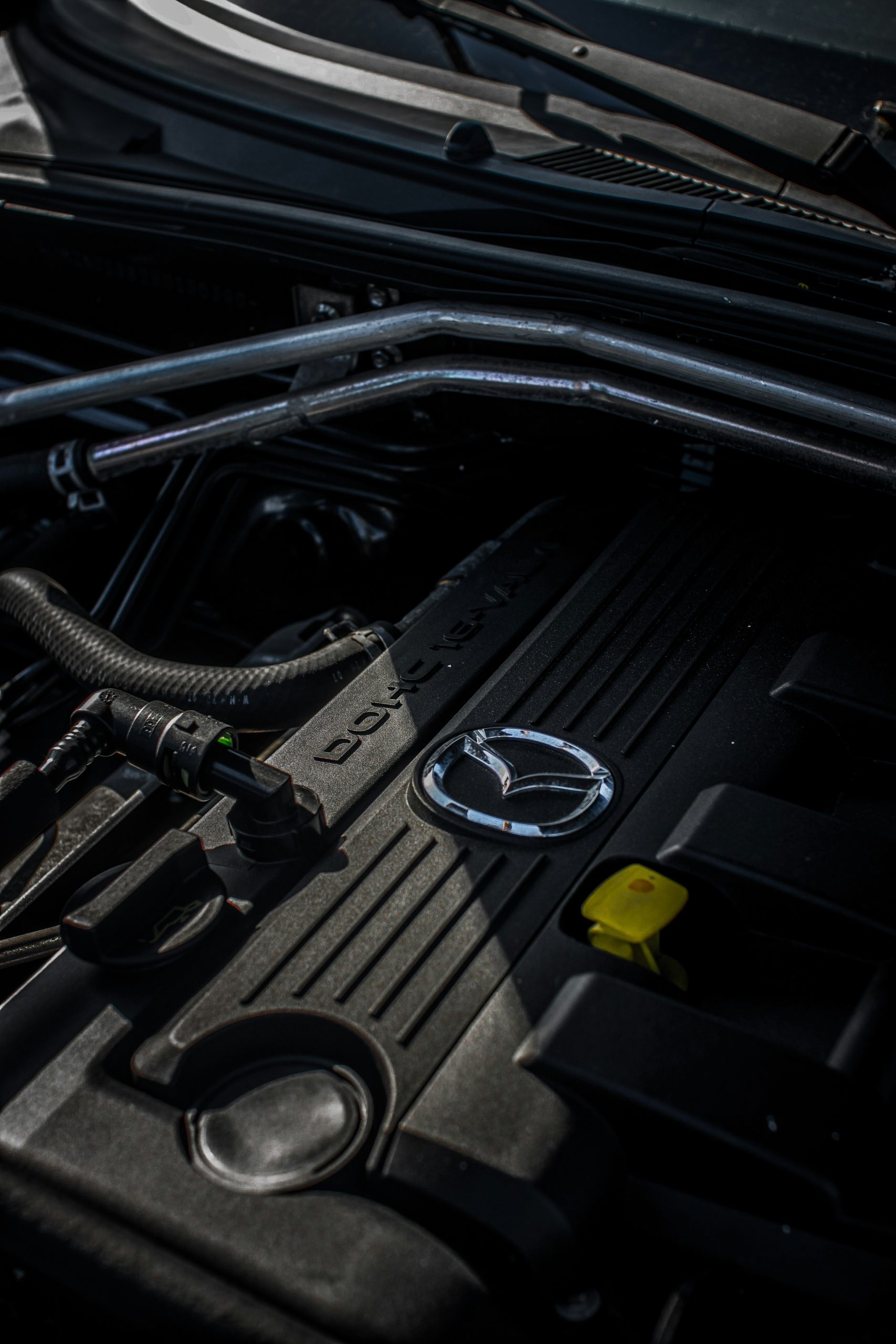
Mazda’s chase for internal combustion perfection takes a bold step forward with the upcoming Skyactiv-Z engine, set to arrive in 2027. This isn’t just another incremental update. It’s Mazda’s response to tightening emissions rules while keeping the soul that makes their cars fun to drive. The Skyactiv-Z brings together advanced combustion tech with hybrid power, putting Mazda right at the front of sustainable performance.
While we’re waiting for this breakthrough at John Kennedy Mazda Conshohocken, you can explore the current CX-5 with proven Skyactiv-G technology, available now.
What Is the Mazda Skyactiv-Z Engine?
The Mazda Skyactiv-Z engine marks the next phase in Mazda’s respected Skyactiv lineup, designed to replace the current Skyactiv-G and Skyactiv-X powerplants. Unlike earlier versions that focused strictly on gasoline efficiency, this new engine tech weaves hybrid capabilities into its DNA from day one.
What drives the Skyactiv-Z is thermal efficiency and emissions reduction, but without killing the responsive feel drivers love. The engine uses advanced combustion strategies that pull more energy from every drop of fuel while cutting harmful emissions. Mazda’s bigger electrification plan leans heavily on this powertrain, which will make its first appearance in the next-generation Mazda CX-5 in 2027.
The Skyactiv-Z captures Mazda’s belief that internal combustion engines still matter in today’s automotive world. Instead of ditching this technology completely, Mazda has invested in making it cleaner and more efficient than ever before.
How Skyactiv-Z Technology Works
Skyactiv technology has always been about pushing internal combustion to its limits. The Skyactiv-Z pushes that envelope even further by weaving together several breakthrough innovations. The engine hits impressive thermal efficiency through smart combustion management and clever energy recovery.
The Lambda One air-fuel ratio system stands out here. It keeps the ideal stoichiometric combustion mixture across different driving situations and engine speeds. This consistent approach ensures complete fuel burning, cutting wasted energy and harmful emissions. Maintaining this balance at high loads is made possible with electric motor assistance during demanding driving moments.
Heat insulation tech plays a huge part in the Skyactiv-Z’s efficiency gains. Regular engines waste significant energy through heat loss. Mazda’s new engine tech captures this waste heat and turns it into usable power, basically squeezing more performance from the same fuel. This thermal management system represents years of research into materials science and combustion dynamics.
The hybrid integration isn’t just tacked on as an afterthought. Electric motors back up the combustion engine during acceleration and high-load situations, letting the gasoline engine stay in its sweet spot for efficiency. This partnership delivers responsive driving while maintaining impressive fuel economy.
Lambda One Stoichiometric Combustion Explained
Lambda One combustion technology powers the heart of the Skyactiv-Z’s efficiency revolution. “Lambda One” (λ=1.0) refers to the stoichiometric air-fuel ratio where combustion hits theoretical perfection, with fuel and air balanced at exactly the right ratio for complete burning.
What makes the Skyactiv-Z remarkable is its ability to maintain the ideal λ=1.0 ratio across the full range of engine speeds and loads, something conventional engines can achieve only under limited conditions. Unlike lean-burn strategies that use excess air, Lambda One keeps this precise balance even at high loads where conventional engines typically enrich the mixture to protect against heat and knock.
Running a super-lean mixture creates serious engineering headaches. Too much air causes misfires, rough running, and power loss. Mazda solved these problems through precise fuel-injection timing, optimized cylinder design, and strategic electric-motor assistance.
Maintaining this ideal stoichiometric ratio across all operating conditions dramatically cuts nitrogen oxide and particulate emissions while boosting fuel economy. The engine keeps strong power output because the hybrid system delivers instant torque while the engine operates at peak efficiency, especially during hard acceleration or highway speeds.
What you get is an engine that should feel responsive and powerful while meeting tough environmental standards, including the upcoming Euro 7 regulations and tightening North American emissions requirements.
The Hybrid 2.5L Inline-Four Architecture
The Mazda 2.5-liter engine has earned its stripes across Mazda’s lineup, and the Skyactiv-Z builds on this solid foundation. The 2.5-liter displacement hits a sweet spot between power and efficiency for midsize vehicles. What makes this version special is its hybrid-ready design from the very beginning.
Mazda built the Skyactiv-Z to handle a range of hybrid setups, from mild-hybrid systems to more complex arrangements. This flexibility lets them adapt the powertrain to different vehicle types and market needs. The inline-four setup delivers smooth operation and compact packaging, crucial for modern vehicle design where interior space stays a priority.
Lightweight construction guides every component choice. Reduced engine weight improves vehicle handling and acceleration while needing less energy to move. Advanced materials in the engine block, pistons, and connecting rods achieve strength without extra weight.
The hybrid components blend seamlessly with the engine’s design instead of feeling bolted on later. Battery placement, electric motor positioning, and cooling systems work as a cohesive unit, ensuring an instant response to driver inputs while efficiently managing energy flow.
How Skyactiv-Z Compares to Skyactiv-G and Skyactiv-X
Skyactiv-G and Skyactiv-X: The Foundations
Getting the Mazda Skyactiv-Z engine means understanding its predecessors. The Mazda Skyactiv-G brought high compression ratios to squeeze more energy from gasoline, fundamentally changing what efficient engines could do. These powerplants currently run across Mazda’s lineup, including the popular CX-5, proving both reliable and economical.
The Skyactiv-X engine pushed efficiency even further with Spark-Controlled Compression Ignition (SPCCI) technology, blending spark ignition with compression-ignition principles. This delivered diesel-like efficiency with gasoline’s clean emissions.
How the Skyactiv-Z Builds on Both
The Skyactiv-Z draws on lessons from earlier engines while adding hybrid capability. It keeps the high compression ratios that made Skyactiv-G successful and uses advanced combustion control inspired by Skyactiv-X development. The hybrid integration, though, breaks entirely new ground for Mazda’s mainstream engines.
| Feature | Skyactiv-G | Skyactiv-X | Skyactiv-Z (Expected) |
| Displacement | 2.5L inline-four | 2.0L inline-four | 2.5L inline-four hybrid |
| Key Tech | High 13-14:1 compression | Spark-controlled compression ignition (SPCCI) | Lambda 1 stoichiometric combustion across all loads, heat insulation |
| Efficiency Focus | High compression for base efficiency | Lean burn at low loads | Full-range super-lean burn + hybrid |
| Power Output Example | 187 hp (2026 CX-5) | 177 hp / 224 Nm (2.0L) | >220 hp hybrid potential |
| Role | Current U.S. standard | Alternative compression ignition option | Replaces both by 2027 |
Thermal efficiency improvements over Skyactiv-G should be substantial, thanks to better combustion management and energy recovery systems. Compared to the Skyactiv-X engine, the Skyactiv-Z offers greater flexibility through its hybrid setup while potentially being simpler to build.
For drivers, this means better performance, lower fuel use, and reduced emissions. If you want to experience Skyactiv technology firsthand, contact our team to schedule a test drive of today’s lineup.
Meeting Euro 7 and Tightening North American Emissions Standards
How the Skyactiv-Z Is Engineered to Meet Tougher Standards
Regulatory rules drive much innovation in Mazda’s new engines, and the Skyactiv-Z faces some of the toughest standards in automotive history. Euro 7 regulations in Europe and evolving clean air standards in North America set aggressive emissions limits that challenge even modern powertrains.
Mazda engineers treated these standards as design targets rather than roadblocks. Maintaining precise stoichiometric combustion across all operating conditions naturally produces fewer nitrogen oxides, a key regulatory concern. Complete, balanced burning reduces the excess nitrogen compounds that form when combustion temperatures spike.
Advanced catalytic converter systems and particulate filters handle the small amounts of pollutants that do form during combustion. The hybrid system reduces overall fuel consumption, thereby lowering total emissions.
Staying Clean Without Sacrificing Performance
Meeting these standards without hurting performance required sophisticated engine management systems. The Skyactiv-Z’s computer constantly monitors dozens of sensors, adjusting fuel injection, ignition timing, and electric motor assistance thousands of times per second. This real-time optimization keeps the engine always operating in its cleanest, most efficient mode while delivering the power drivers want.
Durability testing under tough conditions confirms the Skyactiv-Z should maintain its clean performance throughout the vehicle’s life. Mazda’s reputation for reliability extends to these environmental systems, ensuring the engine stays compliant well beyond regulatory requirements.
Expected Performance and Fuel Efficiency
The Skyactiv-Z promises impressive numbers when it hits production. While exact specs stay under wraps until closer to launch, the combination of technologies points to significant improvements over current engines. Enhanced thermal efficiency means more of the fuel’s energy is converted into forward motion rather than wasted as heat.
Hybrid assistance allows the engine to operate in its optimal efficiency range more often. During city driving, where conventional engines struggle with constant acceleration and deceleration, the electric motor smooths out these transitions. Highway cruising benefits from the combustion engine’s ability to maintain steady speeds efficiently.
Expected torque delivery should feel strong and immediate, thanks to the electric motor support during acceleration. The new engine tech should produce over 220 hp in hybrid configuration, with the hybrid system boosting power during spirited driving. Drivers used to current Skyactiv engines should notice improved responsiveness without losing the smooth, refined character Mazda engines are known for.
Fuel efficiency gains over non-hybrid Skyactiv engines could be substantial, particularly in stop-and-go traffic where hybrid systems excel. The overall package aims to cut fuel consumption by double-digit percentages compared to current powertrains while maintaining or improving driving enjoyment.
Skyactiv-Z Release Timeline and Future Applications
The 2027 launch date for the Skyactiv-Z in the Mazda CX-5 hybrid reflects Mazda’s careful approach to new technology. This timeline enables thorough testing across diverse conditions worldwide, ensuring reliability that matches the brand’s reputation. The CX-5 makes perfect sense as the first application, given its popularity and suitability for hybrid tech.
Future applications will likely spread across Mazda’s lineup once the engine proves itself in the CX-5. The Mazda3 could get a Skyactiv-Z variant, bringing hybrid efficiency to the compact segment. Larger SUVs in Mazda’s lineup might benefit from scaled-up versions of the technology. Mazda has hinted that the technology will extend to larger six-cylinder engines and even inform improvements to their rotary engine development.
Mazda’s electrification strategy involves multiple paths rather than a single solution for every vehicle. The Skyactiv-Z represents their commitment to refined internal combustion technology alongside pure electric vehicles. This diverse approach recognizes that different customers have different needs and that infrastructure varies globally.
Explore Current Mazda Models at John Kennedy Mazda Conshohocken
While the Skyactiv-Z engine arrives in 2027, today’s Mazda lineup already showcases impressive Skyactiv technology across multiple models. We at John Kennedy Mazda Conshohocken offer the full range of current Mazda vehicles, from sporty sedans to versatile SUVs, each benefiting from decades of engineering refinement. Our Montgomery County dealership has served the community for nearly 70 years, building relationships based on trust and exceptional service.
Our sales team knows Mazda Skyactiv technology and how it benefits your driving experience in Conshohocken and throughout Montgomery County. Whether you’re commuting to Philadelphia or navigating local traffic patterns, we can help you find the perfect Mazda for your needs. The new Mazda CX-5 remains a popular choice, offering the versatility and efficiency that make it ideal for the area.
Beyond sales, our service center employs factory-trained technicians who understand every detail of Mazda’s advanced engines. We use genuine Mazda parts and follow manufacturer specifications precisely, ensuring your vehicle maintains its performance and reliability for years.
Visit Us Today
Visit us at 1411 Ridge Pike in Conshohocken to experience the current generation of Mazda engineering. Our flexible financing options make driving home in a new or pre-owned Mazda more accessible than you might expect. Call our sales team at 610-272-0700 to learn about available inventory and current specials, or get in touch to ask questions about Skyactiv-Z or schedule a test drive.
When the Skyactiv-Z arrives in 2027, we’ll be ready to introduce you to Mazda’s latest innovation, but why wait when today’s models already deliver exceptional performance and efficiency?
Connect with us


- July 2026
- June 2026
- April 2026
- March 2026
- February 2026
- January 2026
- December 2025
- November 2025
- October 2025
- September 2025
- August 2025
- July 2025
- June 2025
- May 2025
- April 2025
- March 2025
- February 2025
- January 2025
- December 2024
- November 2024
- October 2024
- September 2024
- August 2024
- May 2024
- April 2024
- March 2024
- February 2024
- January 2024
- December 2023
- November 2023