

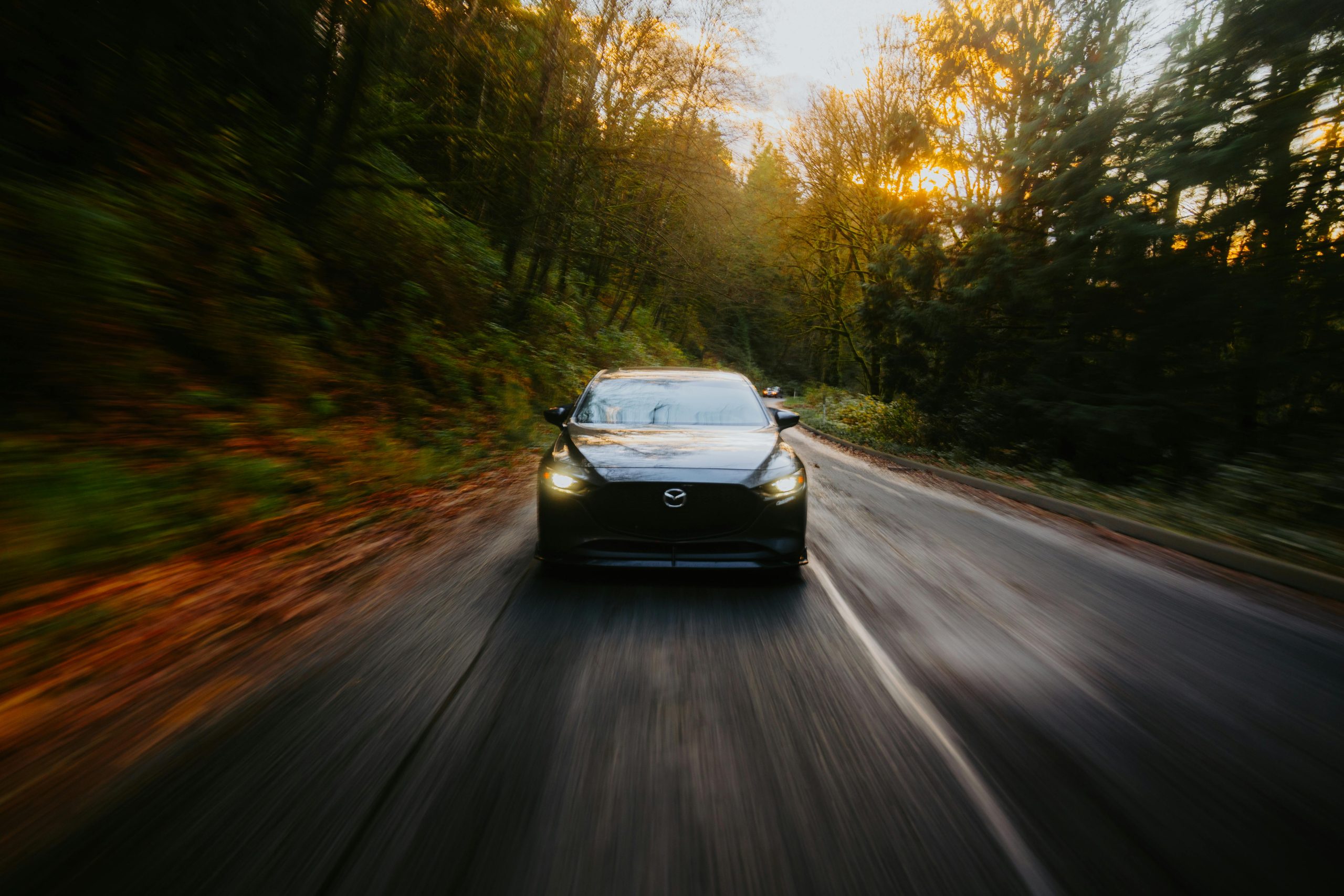
Winter weather in Montgomery County puts vehicles to the test. Between slick suburban roads, unpredictable snowfall, and daily highway commutes into Philadelphia, reliability isn’t optional — it’s essential. Two brands many local drivers consider are Mazda and Nissan, both known for all-wheel-drive capability and practical vehicles. But when long-term dependability is the deciding factor, which brand comes out ahead?
Our team at John Kennedy Mazda of Conshohocken took a closer look at Mazda vs. Nissan reliability to help you decide which automaker is better suited for your daily drive.
Brand Background: How Mazda and Nissan Approach Reliability
Mazda: Engineering Simplicity and Driver Confidence
Mazda was founded in 1920 in Hiroshima, Japan, originally producing cork products before transitioning into vehicles. Over the decades, Mazda became known for innovative engineering — most famously its rotary engines — but in recent years, its reliability gains have come from doing the opposite: simplifying.
Mazda’s modern SKYACTIV® philosophy focuses on naturally aspirated engines, refined transmissions, and lightweight platforms that reduce complexity and long-term wear. Combined with Mazda’s “KODO — Soul of Motion” design language and “Zoom-Zoom” driving philosophy, the brand has built vehicles that are engaging to drive and dependable to own.
Nissan: Proven Platforms and Broad Appeal
Nissan’s history dates back to 1911, officially becoming Nissan Motor Co. in 1933. Known for its mass-market appeal, Nissan has built a reputation on accessible technology, fuel efficiency, and widespread availability.
The brand has also been an EV pioneer, from the early Tama electric car to the groundbreaking Nissan LEAF. While Nissan holds a larger U.S. market share (around 7% compared to Mazda’s 3%), its reliability reputation has been more model-dependent — strong in some vehicles, less consistent in others.
Real-World Comparison: Mazda CX-5 vs. Nissan Rogue Reliability
To put reliability into context, let’s compare two popular compact SUVs you’ll frequently see around Conshohocken: the Mazda CX-5 and the Nissan Rogue.
Powertrains and Mechanical Confidence
The Mazda CX-5 offers a 2.5-liter SKYACTIV® engine producing 187 horsepower, with an available turbocharged version delivering up to 256 horsepower and 320 lb-ft of torque (with premium fuel). Mazda’s use of proven engine designs has played a major role in its strong dependability scores.
The Nissan Rogue uses a turbocharged three-cylinder engine making 201 horsepower and 225 lb-ft of torque. While efficient, turbocharged three-cylinder engines tend to be more mechanically complex, which can impact long-term reliability over high mileage.
AWD and Towing Reliability
Mazda includes all-wheel drive as standard on the CX-5 — a big advantage for winter reliability. Nissan offers AWD on the Rogue, but only as an upgrade.
If you tow trailers, small boats, or gear for weekend trips, reliability under load matters. The CX-5 is rated to tow up to 2,000 pounds, compared to the Rogue’s 1,500-pound capacity, giving Mazda an edge in durability for active lifestyles.
Reliability Ratings and Ownership Costs
Industry Reliability Scores
Mazda ranks second among mass-market brands in the 2025 J.D. Power Vehicle Dependability Study, with just 161 problems per 100 vehicles, far outperforming the industry average of 202.
- Mazda CX-5 RepairPal score: 4.5 out of 5
- Nissan Rogue RepairPal score: 4.0 out of 5
While Nissan has dependable models — such as the Kicks and Murano — Mazda’s reliability scores are consistently strong across its lineup.
Maintenance and Long-Term Costs
According to CarEdge, Nissan owners spend an average of $7,407 over 10 years on maintenance and repairs. That places Nissan behind brands like Toyota and Honda and close to Hyundai.
Mazda vehicles, particularly the CX-5, are frequently praised by Consumer Reports for combining strong reliability with excellent build quality, quiet cabins, and responsive handling — benefits that matter on Pennsylvania’s curving back roads and congested highways alike.
Safety, Reliability, and Warranty Coverage
Mazda has become a safety leader, earning eight 2025 IIHS Top Safety Pick+ awards, more than any other automaker. Award-winning models include the Mazda3, CX-30, CX-50, CX-90, and CX-5. These results reinforce Mazda’s focus on long-term occupant protection and structural integrity.
Nissan also performs well in crash testing, with vehicles like the Altima earning five-star NHTSA ratings, particularly in side-impact and rollover categories.
Both brands offer identical warranty coverage:
- 3-year/36,000-mile bumper-to-bumper
- 5-year/60,000-mile powertrain
Mazda vs. Nissan Reliability: Which Is Right for You?
If reliability is your top priority, Mazda has the clear edge. Higher dependability rankings, simpler mechanical designs, standard AWD availability, and class-leading safety awards make Mazda especially appealing for Montgomery County drivers.
Nissan remains a solid option for drivers focused on EPA fuel economy estimates and familiar technology. However, if you want a vehicle that feels refined, holds up over time, and delivers confidence during winter commutes and weekend trips alike, Mazda stands out.
Test-Drive a Reliable New Mazda in Conshohocken
Ready to experience Mazda reliability firsthand? Visit John Kennedy Mazda of Conshohocken to explore our new Mazda inventory or schedule a test drive. Our team understands local driving conditions and can help you choose a vehicle built to handle them.
Keeping your Mazda dependable is easy, too — our Mazda-certified service technicians are here to help, and online scheduling makes maintenance simple and convenient.
Let us help you find a vehicle you can trust for years to come.
Connect with us


- July 2026
- June 2026
- April 2026
- March 2026
- February 2026
- January 2026
- December 2025
- November 2025
- October 2025
- September 2025
- August 2025
- July 2025
- June 2025
- May 2025
- April 2025
- March 2025
- February 2025
- January 2025
- December 2024
- November 2024
- October 2024
- September 2024
- August 2024
- May 2024
- April 2024
- March 2024
- February 2024
- January 2024
- December 2023
- November 2023